International Forum on the Rural Satoyama Initiative in Taiwan
From July 4th to 8th, I was invited by Professor Chen-Fa Wu of Taiwan to participate in the international forum "SATOYAMA Initiative in Taiwan" held in Taiwan.
Last December, I received significant assistance from Professor Wu during the Taiwan SATOYAMA Olympics and a presentation at National Chung Hsing University. This connection led to my invitation for this event, as we also spent time together in Ecuador this past March.
The visit destinations are the four locations shown in the diagram:
July 5: Taomi community and Wufu community in Puli, Nantou County
July 7: Shuanglianpi area and Gangkou community in Yuanshan, Yilan County

Conference Details
On July 6th, a conference will be held at the National Taiwan University Convention Center in Taipei City. This event will feature presentations on the current status reports and case studies based on IPSI's strategic objectives 1 to 5.

In Taomi, Nantou County, the revival following the major earthquake in 1999 has led to the promotion of organic farming and ecological conservation.

In Wufu, response to the situation where birds of prey, such as the Black-winged Kite, were dying from secondary damage, the use of pesticides was discontinued. This initiative allowed for the establishment of a brand of rice called "Black-winged Kite Rice," which is fully supported by many local businesses and sold directly to consumers. Furthermore, the organic brand rice has progressed to the development of sake and shochu in a unique brewing facility, as well as processing and selling it as noodles.

In Shuanglianpi, Yilan County, efforts are underway to restore the SATOYAMA environment around abandoned irrigation ponds. The objectives of this project are as follows:
Promotion of environmental education
Establishment of ecological learning centers
Facilitation of interaction with urban residents
Encouragement of migration
Revitalization of the local economy
Through these initiatives, Shuanglianpi has achieved success. Interaction with urban residents has deepened, and the importance of the local natural environment has become widely recognized.


The Gangkou District is a coastal community situated against a marine erosion cliff at an elevation of 200 meters. The seaside features expansive shallow sandy beaches, making it a well-known surf point. As a result, the area is home to numerous surf shops.

However, initiatives utilizing organic cultivation of abandoned farmland and traditional fishing methods, such as beach seine fishing, have been yielding positive results. Initially, there were some frictions between tourists and the local community. One solution to this issue was the development of a "Dual-core Partnership Platform" in collaboration with the Tourism Development Association of Malang, Indonesia. This platform facilitated beach clean-up efforts sponsored by companies and joint development projects, successfully transforming tourism-related conflict into "environmental assets."

It is believed that there was close collaboration with the government's Forestry and Nature Conservation Bureau, the Rural Development and Soil and Water Conservation Bureau, and the authorities of Yilan County.


The forest area of Taiwan is 2.19 million hectares, which is less than one-tenth of Japan's 25 million hectares. The annual harvest volume of timber is only 30,000 to 60,000 cubic meters, resulting in a timber self-sufficiency rate of just 1%. For the average person in Taiwan, forestry, particularly the Japanese timber-centered model, may be difficult to envision.
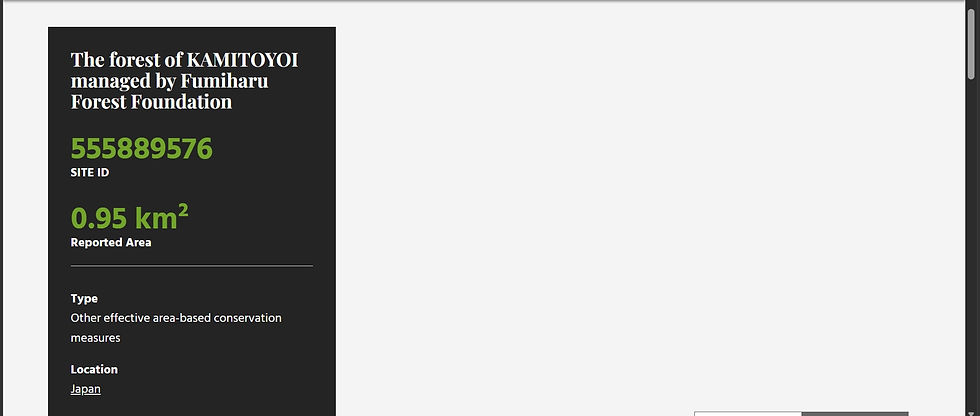
In this context, at the conference, the Fumiharu Forest Foundation presented the following:
The significance of logging and grassland conversion in the 50-year cycle of man-made forests for biodiversity.
The development of monitoring methods initiated this year to gather evidence on this issue.
Supply chains connecting local communities and regional industries in the Tokachi area.


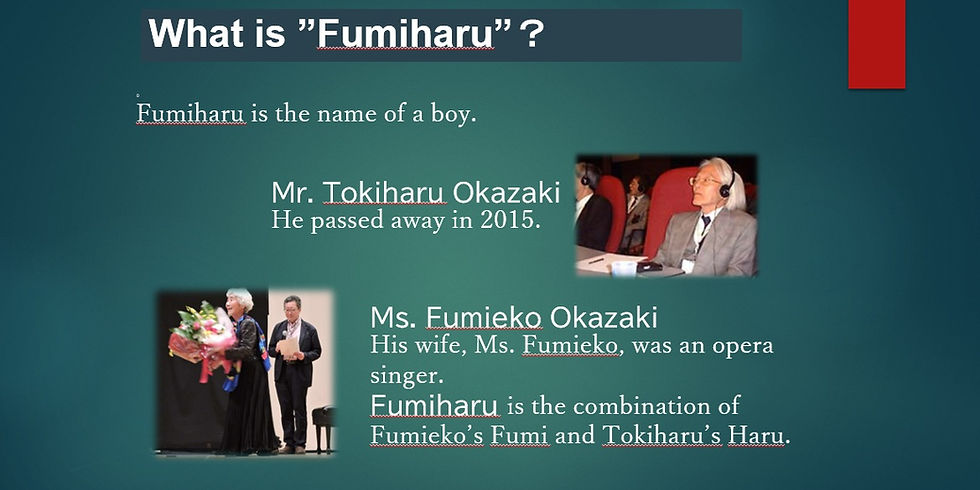
Additionally, we have introduced that the establishment of the Fumiharu Forest Foundation originated from the aspirations of Mr. Okazaki Tokiharu and the 2002 Johannesburg Summit. It is also noteworthy that "Fumiharu" was the name given to the son of Tokiharu and Fumieko.
Starting next year, I believe it would be a wonderful opportunity to guide Taiwanese researchers and administrative officials through the Boreal Forest in Tokachi. Engaging in discussions about the differences and value of this unique ecosystem would surely lead to an enjoyable experience.


Comments